5 min read
Lost in Translation: How Multilingual Training is Closing Australia's Workforce Safety Gap

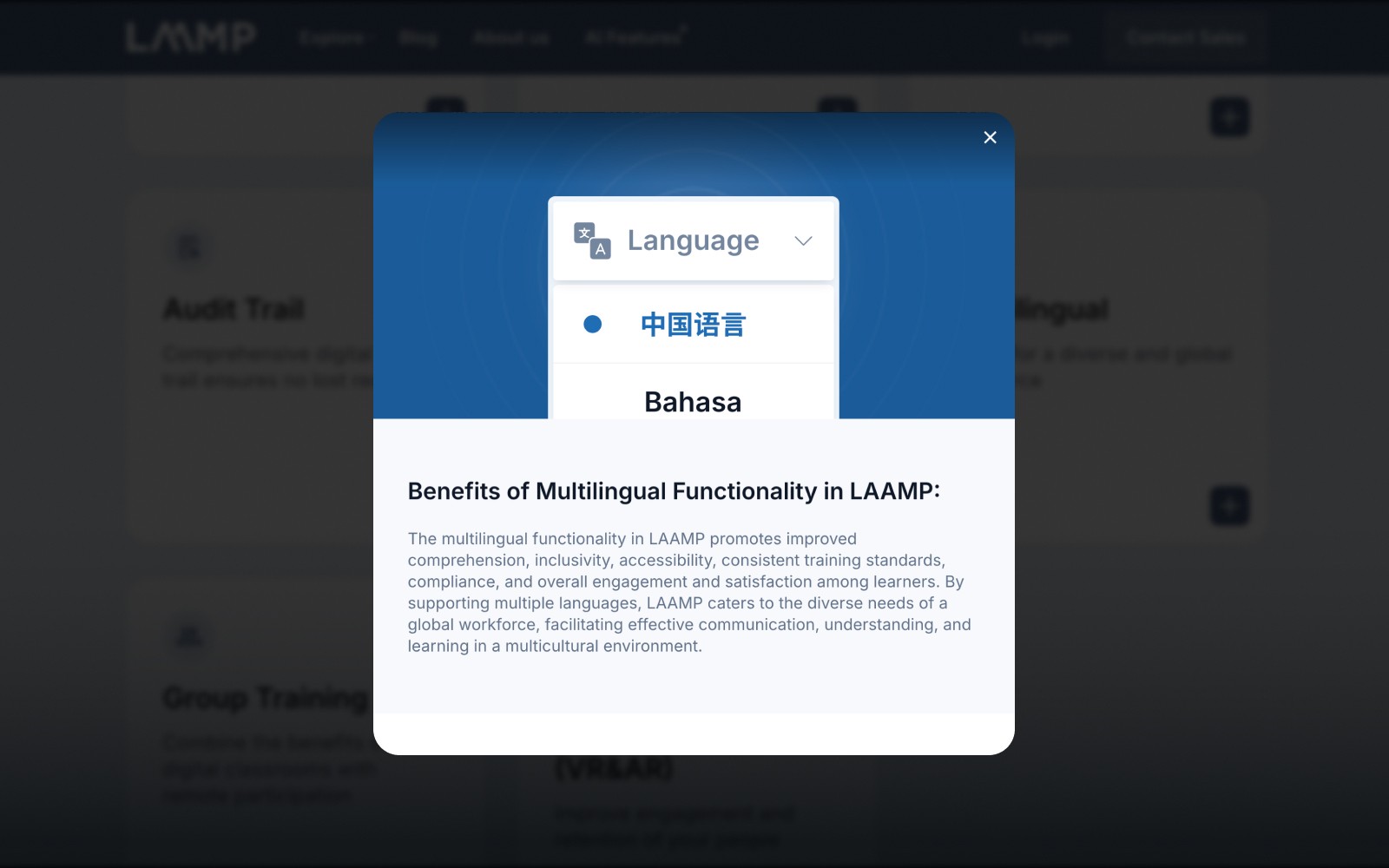
Australia has one of the most culturally and linguistically diverse workforces in the world. In sectors like construction, aged care, agriculture, manufacturing, and food processing, workers from non-English-speaking backgrounds represent a significant proportion of the labour force — and in some regions, the majority. Yet most workforce training and safety induction content is delivered in English, at a reading level and pace that assumes fluency. This is not just an inclusion problem. It is a safety and compliance risk. LAAMP is built to address it.
The Safety Cost of Language Barriers
The relationship between language barriers and workplace injury risk is well-established. Workers who do not fully understand safety instructions, emergency procedures, or operational requirements are more likely to make errors — not because they are less competent, but because critical information did not land. According to Safe Work Australia, workers who are new to a job, new to a site, or new to Australia face elevated injury risk — and language barriers compound each of these factors.
For a worker completing a safety induction in their second or third language, comprehension gaps are almost inevitable. A tick in the completed box does not mean the content was understood. And if something goes wrong on-site, a ticked form is not a meaningful defence for a business that did not take reasonable steps to ensure genuine understanding.
Compliance That Actually Works: The Comprehension Standard
Under Australia's model Work Health and Safety laws, the standard for workplace safety is genuine risk management, not documentation. A business that can demonstrate a worker clicked through an English-language induction but cannot demonstrate the worker understood it is not in a strong compliance position.
The practical implication is clear: for organisations employing workers from non-English-speaking backgrounds, delivering training in a language the worker actually understands is not an optional extra. It is part of meeting your duty of care.
LAAMP's Multilingual Capability: Training in the Worker's Language
LAAMP's workforce training platform supports multilingual content delivery — allowing organisations to build and deploy training and induction content in multiple languages. Workers receive training in the language they are most comfortable with, improving comprehension, engagement, and retention of critical safety information.
Effective multilingual training requires more than a translation tool. Content structure, assessment questions, and practical evidence requirements all need to be calibrated for the target language and cultural context. LAAMP provides the platform infrastructure to build and manage this content at scale, across all your sites and workforce segments.
Mobile Delivery: Meeting Workers Where They Are
For many CALD (Culturally and Linguistically Diverse) workers, a mobile device is the most natural interface for digital content. LAAMP's mobile-first design means that training content — including multilingual inductions and assessments — is accessible on any smartphone, in any location. The platform's offline capability is particularly valuable for workers in regional or remote settings where internet connectivity is inconsistent. Explore the full LAAMP feature set to see how mobile delivery works in practice.
Practical Assessments: Beyond the Multiple Choice
For workers whose written English is limited, multiple-choice assessments can systematically underestimate competency. A worker may fully understand how to operate equipment safely but struggle to parse questions written in formal English.
LAAMP's practical assessment tools allow workers to demonstrate competency through video and photographic evidence of their practical skills — a format inherently more equitable for workers from non-English-speaking backgrounds. This evidence-based approach captures genuine competency rather than language proficiency, and provides a richer, more defensible record of verified capability.
Building a Genuinely Inclusive Compliance Programme
The organisations that lead on multilingual training are not doing it out of altruism alone — though the ethical case is clear. They are doing it because it works. Workers who genuinely understand safety requirements make fewer errors. Inductions delivered in a worker's primary language produce better retention. Assessments calibrated for diverse learners produce more accurate pictures of actual competency.
For Australian businesses operating in sectors with significant CALD workforces, investing in multilingual training capability is one of the highest-return compliance investments available. It reduces injury risk, strengthens your compliance position, and demonstrates a genuine commitment to worker safety increasingly expected by regulators, clients, and workers themselves.
Start the Conversation
LAAMP's multilingual training capability is part of a broader platform built for the operational realities of diverse, dispersed Australian workforces. To explore how LAAMP can support your commitment to inclusive, effective workforce training, get in touch with the LAAMP team today.

