5 min read
LMS for Mining and Construction: Why Generic Platforms Fall Short (And What to Look for Instead)

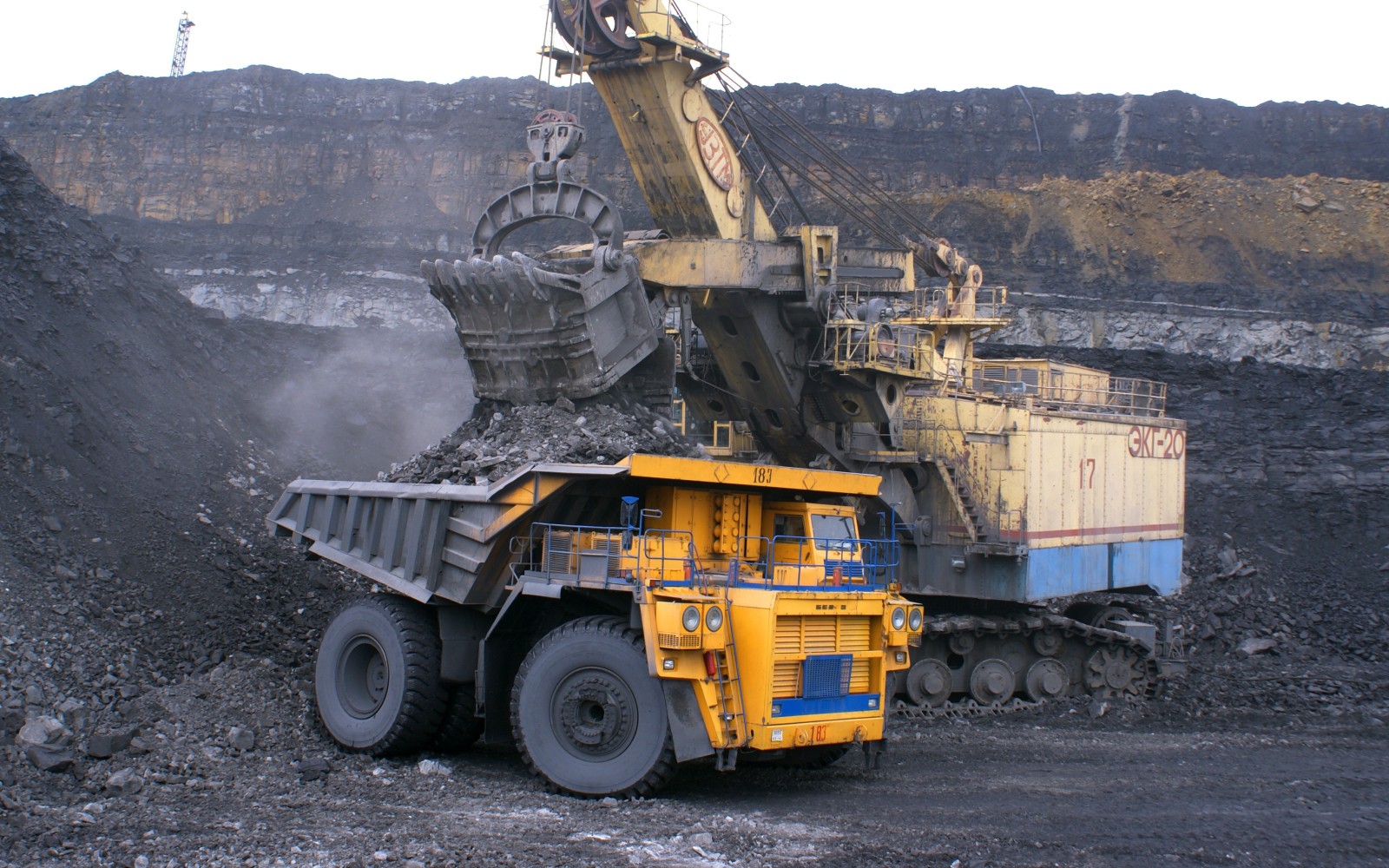
A generic LMS is built for office learners. Mining and construction sites need more: training that works offline, identity checks on the person being assessed, practical assessment evidence, records that move with the worker, and an audit trail that holds up when a regulator asks.
Learning management systems have been around for decades. Most large Australian organisations already have one. So why do so many mining and construction companies still struggle with training compliance, inconsistent induction quality, and manual credential tracking?
The answer, in most cases, is that they’re using a platform built for corporate eLearning and trying to make it work for a fundamentally different environment.
A generic LMS designed for an office-based workforce doesn’t account for remote sites with no internet, workers who don’t have a company email address, practical competency assessments that require field evidence, or the legal requirements of high-risk industry training. These aren’t edge cases. They’re the norm in mining and construction.
What a Generic LMS Is Good At (And Where It Breaks Down)
To be fair, a standard LMS does some things well: delivering and tracking online courses, managing enrolments, and providing basic completion reporting. For corporate compliance training (inductions for new office staff, policy acknowledgements, HR e-learning), it’s often perfectly adequate.
But for high-risk, distributed, and site-based workforces, the gaps are significant:
No offline functionality: useless at remote sites with poor connectivity
No identity verification: no way to confirm the right person completed the training
No practical assessment capability: only multiple-choice or click-through completion
No field evidence capture: can’t attach photos, videos, or GPS to training records
No transferable credentials: every new employer starts from scratch
No real-time site access integration: can’t gate site entry based on training status
In an environment where the consequences of a competency gap are measured in serious incidents rather than missed sales quotas, these aren’t minor limitations.
The gap between ‘completed a module’ and ‘demonstrably competent to perform the task safely’ is wide. In high-risk industries, that gap is where incidents happen. A purpose-built platform closes it. A generic LMS doesn’t even address it.
Generic LMS vs purpose-built platform: how do they compare?
What you need on site | Typical generic corporate LMS | What to look for in a purpose-built platform | LAAMP |
|---|---|---|---|
Training at remote sites with no signal | Usually needs a connection | Full offline mode that syncs later | Inductions and assessments run offline and sync when the device reconnects |
Proof the right person did the training | Login only | Identity check during assessment | Facial verification |
Practical, task-based assessment | Multiple choice or click-through completion | Assessor-led practical assessment with evidence | Theory, task-based and assessor-led practical assessment |
Field evidence | Cannot attach photos, video or GPS to records | Photo, video, audio and signature capture | Digital evidence capture (video, photo, audio and signature) |
Records that move with the worker | Stay with each employer | Portable, verified credentials | Transferable passport |
Site access tied to training status | Not linked to site entry | Gate checks against the training record | Entrii clears the gate on the same worker record |
Existing HR and LMS systems | Often expected to be the only system | Integration rather than replacement | Open API integration with HR, LMS and HCM systems |
Audit evidence | Completion reports | Full digital audit trail | Every record shows who was assessed, against what, by whom and when |
See how LAAMP runs inductions, VOC and site access on one worker record.
What Purpose-Built Actually Means
The phrase ‘purpose-built for high-risk industries’ gets used a lot in software marketing. Here’s what it should actually mean in practice:
Built for the Frontline Worker, Not the Corporate Learner
The interface needs to work for workers who may not be digitally native, who are accessing it on a phone or tablet in a high-vis vest, and who need to complete critical training in an environment where distractions are constant. Simplicity and clarity of UI isn’t cosmetic. It directly affects completion rates and training quality.
Verified Competency, Not Just Completion
Completing a module is not the same as being competent. A purpose-built platform for high-risk industries captures both: completion and evidence of competency. That means practical assessment tools, rich media evidence capture, and verification technology that confirms the person being assessed is who they say they are.
LAAMP’s facial verification and digital evidence capture capabilities address exactly this problem, creating a standard of proof that holds up in regulatory and legal contexts.
Designed for the Compliance Environment, Not Around It
High-risk industry training exists within a specific regulatory framework: the WHS Act, industry codes of practice, licensing requirements, and site-specific access rules. A purpose-built platform is designed with these requirements embedded, not bolted on as an afterthought.
For a side-by-side view, read our LMS vs purpose-built training platform comparison.
The Transferable Passport: A Capability That Changes the Maths
One of the highest-leverage capabilities in purpose-built workforce training platforms is the transferable credential. In Australian mining and resources, the same worker often moves between multiple contractors, projects, and sites throughout a career. Under a generic LMS model, their training history stays siloed with each employer, and they repeat the same inductions over and over.
LAAMP’s transferable digital passport changes this. Verified competencies travel with the worker. Organisations participating in the same platform can recognise each other’s verified training, cutting duplication and accelerating mobilisation times significantly.
For a tier-1 contractor managing thousands of workers across projects, the ROI of reducing duplicate induction time is substantial and easily quantifiable.
Making the Business Case Internally
If you’re evaluating platforms for a mining or construction organisation, the business case typically needs to speak to four audiences: HSE, operations, finance, and IT.
HSE: improved incident prevention through verified competency, stronger audit readiness, and a defensible evidence trail
Operations: faster mobilisation, reduced site access delays, and real-time visibility of workforce training status
Finance: reduced induction duplication, lower admin overhead, and measurable cost savings on paper-based processes
IT: open API integration with existing HR and LMS systems, cloud-based infrastructure, and enterprise-grade data security
The organisations that have made this transition include global mining contractors. One global client saved more than 232,000 hours in a year.
Frequently asked questions
What should an LMS for mining and construction do that a generic LMS does not?
Work offline, verify who is being assessed, capture practical evidence, carry verified credentials between employers, and keep a full audit trail.
Does LAAMP replace our existing LMS?
No. It connects to your HR, LMS and HCM systems through an open API and handles inductions, practical assessment, VOC and evidence.
Does LAAMP work at sites with no internet?
Yes. Inductions and assessments run offline and sync when the device reconnects.
How does LAAMP handle verification of competency (VOC)?
Practical assessments run digitally with evidence capture and facial verification, so every record shows who was assessed, by whom and when. See how VOC fits into LAAMP’s workforce readiness platform.
How much does LAAMP cost?
The Light Tier is $3.30 AUD and the Bright Tier is $6.25 AUD per user per month. The Enterprise Tier is priced on enquiry. See LAAMP pricing.
Who uses LAAMP?
Thiess, CIMIC, Peabody, Pembroke, the Royal Flying Doctor Service, and many other global clients in 15+ countries. LAAMP is built in Adelaide by Cortex Interactive.
The Right Question to Ask
Rather than ‘how do we get our LMS to work better for our sites?’, the more useful question is: ‘what would a platform designed specifically for our workforce actually look like?’
The answer to that question usually describes something quite different from what a generic LMS offers, and the gap represents the opportunity. Explore LAAMP’s platform or book a demo to see what purpose-built looks like for your industry.

